
Electrical Safety Over Water: Designing Piers, Docks, and Marinas That Won't Kill Someone
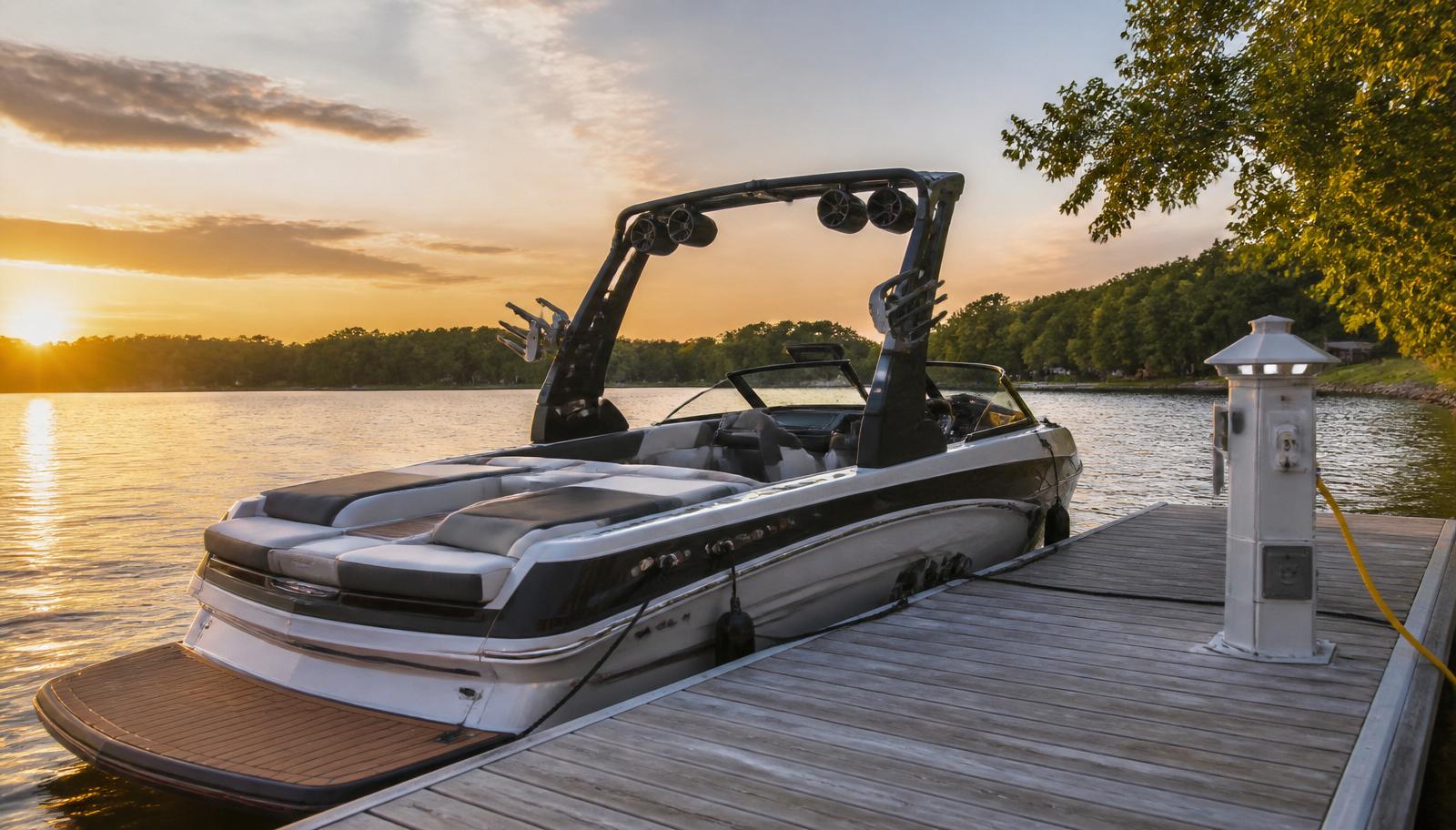
Most people never think about the electrical system on the dock they''re standing on — until a family member goes limp in the water for no visible reason. That scenario has a name: Electric Shock Drowning (ESD). It happens when AC leakage current energizes the water around a boat or dock, paralyzing swimmers before they drown. There is no burn, no scream, no obvious warning.
Freshwater is the worst offender because the human body is a better conductor than the surrounding water. A boat plugged into a faulty shore-power cord, a corroded receptacle, or a nicked underwater feeder can turn a swim area lethal in seconds.
Designing electrical systems over and around water is a distinct discipline. The National Electrical Code (NEC) treats it that way, and so should your engineer. Here''s how our team approaches it.
The codes that govern the water''s edge
Three NEC articles do most of the heavy lifting on any pier, dock, or marina project:
- NEC Article 555 — Marinas, Boatyards, Floating Buildings, and Commercial and Noncommercial Docking Facilities. The core article. Covers equipotential bonding, receptacle types, disconnect location, and ground-fault protection thresholds.
- NEC Article 682 — Natural and Artificially Made Bodies of Water. Applies where electrical equipment is installed in or adjacent to bodies of water not covered by 555 — think intake structures, aeration systems, fountains, and irrigation pumps.
- NEC Article 553 — Floating Buildings. Covers the unique service and grounding challenges when the "building" moves with the water level.
Overlay on those: NFPA 303 (Fire Protection Standard for Marinas and Boatyards) and the local AHJ''s amendments. In Texas, we routinely coordinate with TCEQ and the individual lake authority (LCRA, TRA, SRA, etc.) — each has its own overlay for shoreline construction.
The non-negotiables
Regardless of scope, these show up on every set of V3 dock and marina drawings:
1. Ground-fault protection sized for people, not equipment
NEC 555.35 requires GFCI or GFPE at 30 mA or less on the branch circuits and feeders serving marina and boatyard receptacles. That is ten times more sensitive than a standard equipment ground-fault trip. It''s not there to protect the wire — it''s there to trip before a human heart stops.
Individual shore-power receptacles get GFCI protection at 30 mA. Feeders serving multiple slips get GFPE at 100 mA as a backup layer. We coordinate the trip curves so a single boat''s fault takes out that slip — not the entire dock — which is both a safety and an operational win.
2. Equipotential bonding of everything metallic
Every metal piling, ladder, handrail, cleat, and structural member within the shock hazard zone gets bonded together and back to the service equipment ground. The goal: eliminate any voltage difference a swimmer could bridge between two metal parts. This is the single most-skipped item on non-engineered docks we inspect.
3. Emergency shutoff within sight of the slip
NEC 555.36 requires an emergency electrical disconnect clearly labeled and located no more than 30 inches above the dock, within sight of the receptacles it controls, so a bystander can kill power fast when someone is in trouble. Red housing, "Emergency Shutoff — Electric Shock Hazard" label, no interpretation needed.
4. Signage and swim-area exclusion
"NO SWIMMING WITHIN THE MARINA" signage per NEC 555.10, plus owner-side operational rules. If the dock has shore power, the water next to it is not a swim area. Full stop.
5. Wet-location-rated everything
Receptacles, disconnects, junction boxes, luminaires, and cable — all NEMA 4X or better, marine-grade stainless where corrosion is a factor. We spec marine shore power receptacles (NEMA SS1/SS2) with locking, weatherproof covers, not household 5-15Rs in a bubble cover.
Where boats meet the dock
A boat like a G23 Nautique — 23 feet of surf boat with a tall wakeboard tower, LED lighting rigged through the tower, an amplifier stack, a battery charger, and an onboard water heater — is a rolling electrical load. When it plugs into shore power to charge overnight, everything above the waterline (tower speakers, cabin outlets, chargers) is now connected to the dock''s grounding system. Any fault on the boat becomes a fault on the dock.
That is exactly the scenario NEC 555 is written for. When we design a slip, we assume the worst boat with the oldest shore-power cord is going to plug in tonight — and the system still has to trip safely.
The V3 design checklist
When our team drafts pier, dock, or marina electrical, we work through:
- Service sizing based on realistic diversity — not nameplate — for slip charging loads.
- Feeder routing in continuous, watertight raceway with pull points clear of tidal or flood zones.
- Load calculations per NEC 555.12 with future EV-style charging capacity where the owner asks for it.
- Bonding schedule listing every metal component, its bond conductor size, and connection method.
- GFCI/GFPE coordination study showing that a slip-level trip clears before the feeder-level trip.
- Lighting design with shielded, dark-sky-friendly fixtures that keep glare off the water surface (so operators can see swimmers).
- Emergency disconnect layout mapped to every 10 slips or 100 feet of dock, whichever is tighter.
- Signage plan coordinated with the owner''s branded wayfinding.
- Annual test and maintenance narrative so the owner knows the system needs verification, not just installation.
A few things we push back on
- "Just run a heavy-duty extension cord out to the boat." No. That is the exact failure mode that kills people. A dedicated, GFCI-protected marine receptacle at the slip is the only acceptable answer.
- Aluminum conductors near saltwater or brackish water. We spec copper. The corrosion economics work out over the life of the dock.
- Ganging the emergency shutoff into a locked electrical room. The shutoff has to be reachable in the seconds after a swimmer goes limp, not after someone finds the key.
- Skipping the annual megger test. Insulation resistance on submerged feeders degrades. Test it, log it, replace before it becomes a headline.
If you own or manage waterfront property
Two quick actions worth taking this month:
- Verify your dock has a labeled, in-sight-of-the-slip emergency shutoff. If it doesn''t, get one added.
- Have a licensed electrician meg-test the shore-power feeders and confirm the GFCI/GFPE trip settings match NEC 555.35. Most 10+ year-old marina installations do not.
If you''re planning a new pier, dock, or marina — or renovating an older one — V3''s licensed electrical PEs handle the full design, coordination with the AHJ, and construction administration through energization. We''ve done it on private lakefronts, HOA marinas, and commercial waterfronts across Texas.
Water and 240V don''t need to share a bad day. Design it right the first time.
Have a project to discuss?
V3's licensed PEs deliver coordinated MEP design across Texas and beyond.
Start a conversation