
Selective Coordination Without Oversizing the Service
What the code actually requires
NEC 700.32 and 701.32 require that overcurrent devices in emergency and legally required standby systems be selectively coordinated with all supply-side overcurrent devices. The coordination must hold for the time the fault current is available, not just at the instantaneous trip point.
The common misreading is that this applies to the entire building electrical system. It does not. It applies to the emergency and legally required branches, from the load back to the source.
Where designs go wrong
The usual failure mode is a project that tries to coordinate using only molded case circuit breakers with thermal-magnetic trips. Those devices coordinate well in the long-time region and poorly in the instantaneous region, where most coordination problems actually live.
The response is often to upsize every breaker frame and increase the interrupting rating, which gets expensive fast and still may not coordinate at fault levels above 10,000 amps.
How V3 designs for coordination
Use the right device at the right level. Electronic-trip breakers with adjustable short-time and instantaneous settings give the designer real coordination tools. We specify them at every level of the emergency distribution, not just the main.
Run the study early. A coordination study at 90 percent CDs is too late. We run a preliminary study at design development using assumed available fault current from the utility, then refine it once the utility confirms.
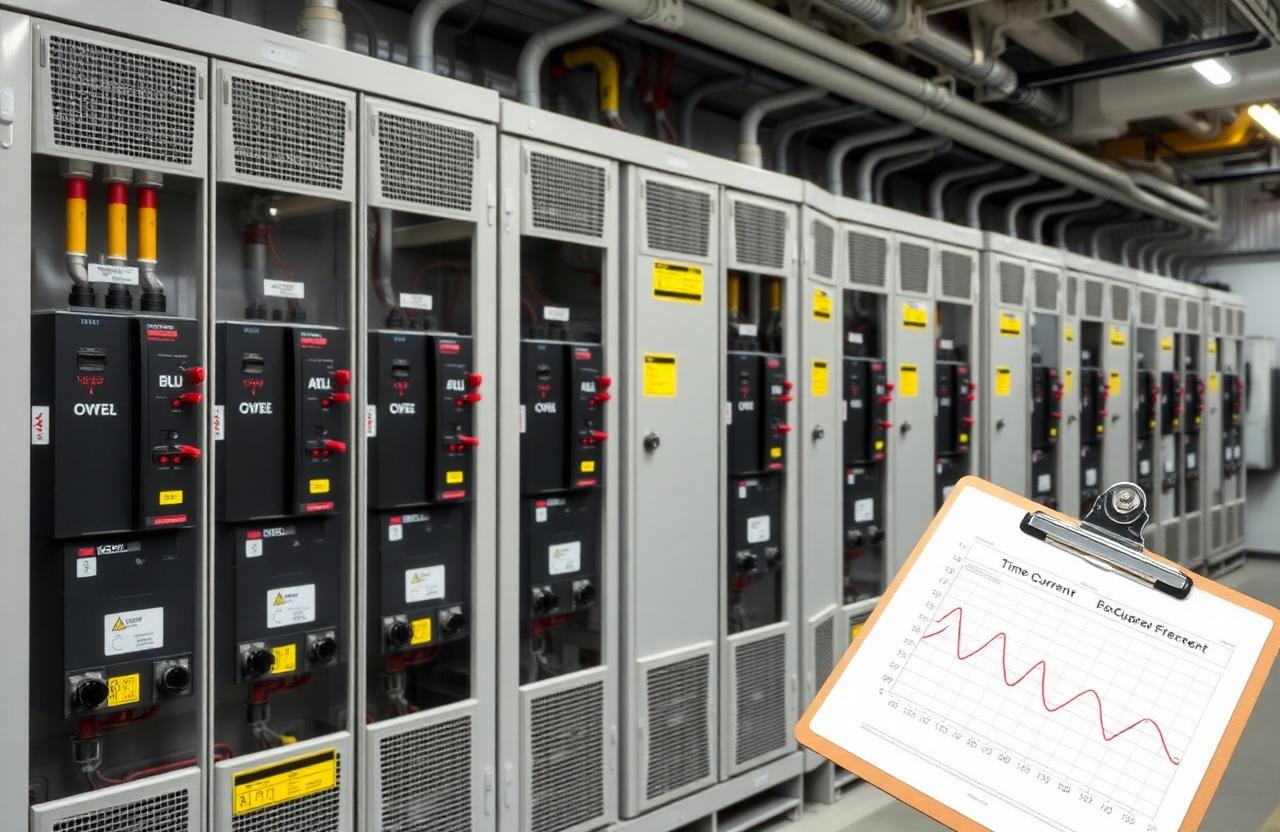
Document the time-current curves. Every coordination decision is backed by overlaid TCC plots in the final report. AHJs increasingly ask to see the curves, not just a one-line note that the system is coordinated.
Coordinate with the generator. Generator sub-transient and transient reactance shape the fault current the downstream devices actually see. We get the generator data sheet before finalizing trip settings.
The payoff
A properly designed coordination scheme means a fault on a single emergency branch trips only its local breaker. The rest of the life safety system stays online. That is the entire point of the code requirement, and it is achievable without oversizing every device upstream.
Have a project to discuss?
V3's licensed PEs deliver coordinated MEP design across Texas and beyond.
Start a conversation