
Sovent Plumbing Systems: When (and Why) to Use Them
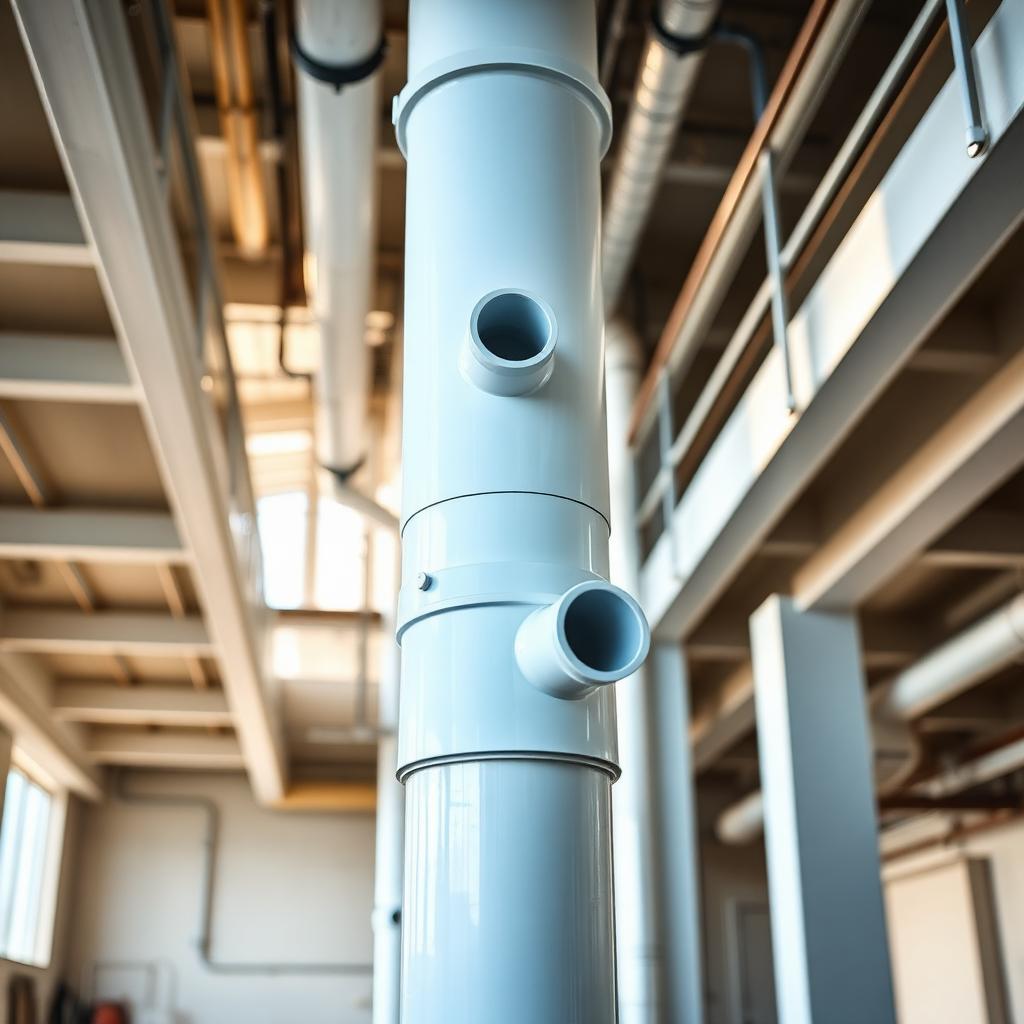
Most plumbing engineers spend their careers laying out the same two stacks side by side: a soil/waste stack carrying drainage down, and a vent stack carrying air up. It works, it's code-compliant, and it eats shaft space on every floor of every building.
A sovent system does the same job with one stack instead of two.
What a sovent system actually is
Sovent is a single-stack drainage and venting system. Instead of running a parallel vent line, the soil stack itself is fitted with two specialty cast fittings on every floor:
- An aerator fitting at each floor where fixtures connect. It mixes incoming horizontal flow with the falling waste column, breaks up the slug of water, and keeps the center of the pipe open so air can move freely.
- A deaerator fitting at the base of the stack (and at major offsets). It relieves pressure where the vertical flow turns horizontal — the spot where back-pressure normally blows traps.
Together those fittings do what a separate vent stack does in a two-pipe system: keep pressures in the drainage stack within ±1" of water column so trap seals stay intact.
Why use it
Sovent is not a novelty — it's been recognized in the IPC and UPC for decades and is widely used in Europe and in U.S. high-rise residential. The case for it on the right project is straightforward:
- Shaft space. One stack instead of two. On a 200-unit mid-rise that's a noticeable amount of usable square footage returned to the leasable plan.
- Material and labor savings. Less pipe, fewer hangers, fewer penetrations, fewer fire-stopping details. The specialty fittings cost more per piece, but the total installed cost is typically lower on buildings of four stories or taller.
- Faster install. Fewer trades touching fewer penetrations means floors close out sooner.
- Cleaner coordination. One riser to coordinate with structural, fire-rated shafts, and the architect's wet-wall layout.
Where it makes sense
Sovent shines in repetitive, stacked-plumbing buildings:
- Multifamily mid- and high-rise (podium, Type III/V over podium, Type I towers)
- Hotels and extended-stay properties with stacked guest baths
- Senior living and student housing with repetitive unit plans
- Dormitories and barracks
Where it usually doesn't pencil: garden-style walk-ups, single-story commercial, restaurants, and buildings with scattered, non-stacked fixture groups. The savings come from repetition — without it, a conventional two-pipe system is simpler and cheaper.
What to watch for
A few realities to plan around when you specify sovent:
- Fitting availability and lead time. Sovent fittings are a specialty product. Order them with the equipment package, not at rough-in.
- Installer familiarity. Not every plumbing contractor has installed sovent. We make sure the GC is briefed early and that the spec includes manufacturer's installation requirements.
- Code path. IPC and UPC both recognize single-stack systems, but the AHJ may want a manufacturer's engineering report. We coordinate that submission as part of the permit set.
- Offsets matter. Each major horizontal offset needs a deaerator. Coordinate the structural transfer level early so the fittings land where they should.
The bottom line
If you're designing a stacked, repetitive building four stories or taller, sovent is worth a serious look. The shaft space, the material savings, and the cleaner coordination usually beat the slightly higher fitting cost — and the system has the code history and field record to back it up.
If you'd like us to evaluate whether sovent makes sense on a project you're planning, send us the scope and we'll come back with a recommendation.
Have a project to discuss?
V3's licensed PEs deliver coordinated MEP design across Texas and beyond.
Start a conversation