
Water Source Heat Pump Systems: Cooling Towers, Boiler Injection, and the Electric Coil Alternative
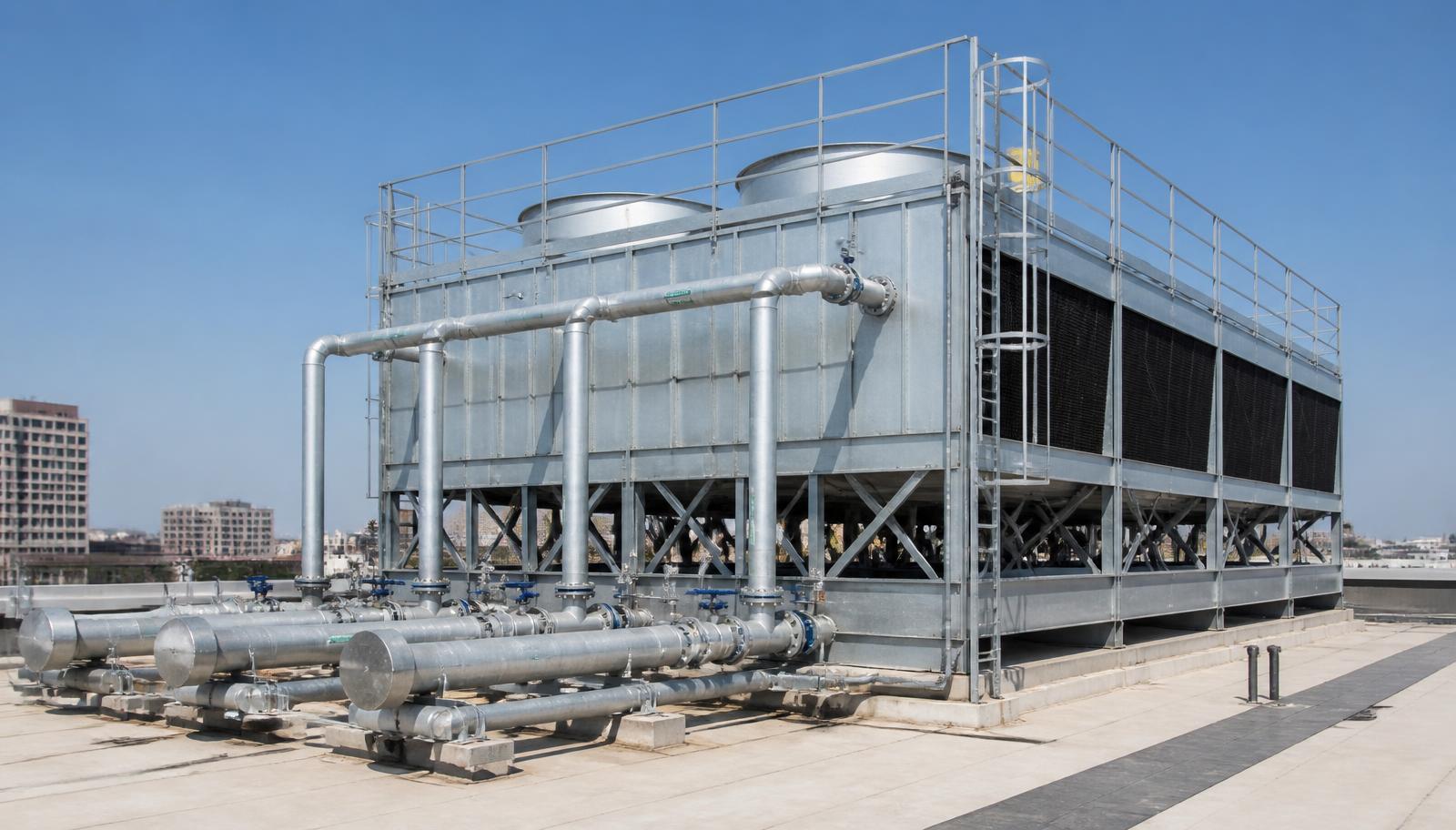
Water source heat pump (WSHP) systems are one of the most durable ideas in commercial HVAC. Instead of running refrigerant all over a building, you run a single loop of ordinary water and let each zone tap into it with its own small heat pump. The mechanical room gets simpler, the zoning gets better, and the tenant who wants it 68 degrees in February can have it while the guy on the south side is still calling for cooling.
The engineering, though, lives almost entirely in one place: keeping that loop in its happy temperature band.
How the loop actually works
Every terminal heat pump does the same two things, just in different directions:
- In cooling, the unit rejects heat into the loop. Loop temperature goes up.
- In heating, the unit pulls heat out of the loop. Loop temperature goes down.
Because the units share water, a building in shoulder season can be remarkably efficient — the interior zones dumping heat are feeding the perimeter zones pulling heat, and the loop just moves that energy around for the cost of a pump. That's the whole pitch, and it's a good one.
The catch is that the building rarely stays balanced. In July, everything is rejecting heat and the loop will climb until something stops it. In January, everything is absorbing heat and the loop will crash until something stops it. Those two "somethings" are the cooling tower and the boiler.
Summer: the cooling tower
Most WSHP units want to see roughly 60°F to 90°F entering water, with 85–90°F being the practical upper end for cooling operation. Push past that and compressor head pressure climbs, capacity drops, and eventually the units start tripping on high pressure right when the building needs them most.
An open-circuit cooling tower handles the high side. Loop water (or a separated heat exchanger circuit) is sprayed across fill, a fraction evaporates, and the evaporative effect drives the water down toward the ambient wet bulb. In North Texas we design around roughly a 78°F design wet bulb, which makes an 85°F loop realistic through the worst afternoons.
Design items we don't skip:
- Tower staging on loop temperature, not outdoor air. Bypass valve first, then fan low speed, then high speed or VFD ramp. Staging on OAT wastes energy and hunts.
- A plate-and-frame heat exchanger when we want to keep open tower water out of the terminal units. It costs you a couple of degrees of approach, but it keeps the loop clean and the heat pump coils out of the fouling business. On buildings where maintenance staffing is thin, this is almost always worth it.
- Freeze protection for the tower — basin heaters, indoor sump, or a full winter drain-down sequence. A tower that only runs eight months a year still has to survive the other four.
- Water treatment budgeted from day one. Evaporative systems concentrate solids. Conductivity-based blowdown, a chemical feed, and a real service contract are not optional line items.
Where water use or tower maintenance is a hard no, a closed-circuit fluid cooler or a dry cooler with glycol becomes the alternative. You give up a few degrees of performance and pay more up front, but you get a sealed loop.
Winter: boiler injection
On the cold end, the loop needs a floor — typically 60°F to 65°F entering water. Below that, the heat pumps lose heating capacity fast, and below roughly 50°F you're into nuisance low-suction trips and comfort complaints.
The classic solution is a boiler injection arrangement: a small boiler (or pair of boilers) sits on a dedicated primary circuit with its own pump, tied into the main loop through a common header or an injection valve. When loop return temperature drops below setpoint, the controller injects just enough hot water to hold the floor. The boiler never tries to heat the whole loop to a heating-water temperature — it only makes up the deficit.
A few things that matter more than they look:
- Size the boiler for the deficit, not the building load. The terminal heat pumps are doing the actual heating. The boiler's job is only to replace the net heat the loop is losing on a design winter morning with minimal internal gains. Oversizing here is the single most common mistake, and it costs you both money and turndown.
- Protect condensing boilers from high return temperature and non-condensing boilers from low return temperature. Loop water in the 60s is right in the sweet spot for condensing equipment — take advantage of it.
- Watch morning warm-up. Every unit calling for heat at 6 a.m. is the boiler's worst hour. Optimal start staggering keeps the injection system from getting slammed.
- Set the deadband wide enough. Roughly 65°F boiler enable and 85°F tower enable gives you a 20-degree dead zone where neither piece of equipment runs and the loop is doing its job for free. That dead band is where WSHP systems earn their reputation.
The electric coil alternative
Not every project wants a boiler. Gas service may not be available, the roof may not have room, the owner may be chasing an all-electric or decarbonization target, or the maintenance staff may simply not want a combustion appliance in the building. In those cases, we look at electric resistance heating coils at the terminal units in place of the loop boiler.
The idea is straightforward: let the loop float down in winter, and when a zone can't get what it needs from the loop, energize a small electric coil in that unit's discharge. Some designs put electric heat only on perimeter units; others use it as backup on every unit.
What you gain:
- No boiler, no gas piping, no flue, no combustion air, no annual burner service.
- Lower first cost on the central plant, and mechanical room space back.
- Simple controls — a staged coil is about as reliable as HVAC gets.
- A clean path to all-electric and to on-site solar or a green power contract.
- Heat is delivered exactly where it's needed, with no distribution losses.
What it costs you:
- Electrical infrastructure. This is the real number. Electric heat is resistance heat, and the coils have to be fed, breakered, and coordinated. On a large building the added connected load can push you into a bigger service, more panels, and more feeder copper. Involve the electrical engineer before the decision is made, not after.
- Efficiency. A heat pump pulling from a 65°F loop delivers a COP of 4 or better. Electric resistance is a COP of 1.0, full stop. Every kilowatt into a coil is one kilowatt of heat.
- Demand charges. Coils tend to come on together on the coldest morning of the year. That coincident peak can set a demand charge that follows the owner for months.
- Loop protection is still required. Letting the loop drop unbounded isn't acceptable — you still need glycol, a low-limit lockout, or both, so the piping and the units are protected even when nothing is making heat.
How we decide
There's no universal answer, but the pattern is fairly consistent:
- Larger buildings with sustained winter heating and available gas → cooling tower plus boiler injection. The efficiency delta pays back the boiler.
- Mild climates, or buildings dominated by internal gains where the loop naturally stays warm → electric coils, sized as a supplement rather than a primary source. The boiler would have run a handful of hours a year anyway.
- All-electric mandates or no gas service → electric coils, with the electrical service impact modeled honestly and a hard look at whether the loop can be kept warmer through better zoning and a bit of glycol.
- Hybrid → a small electric boiler on the loop, or electric coils on the perimeter only with the interior units riding the loop. This is a genuinely good middle ground and it's underused.
The comparison should always be run as a life-cycle cost, not a first-cost cost. Model the loop temperature across the year, count the actual hours the boiler would fire, and put a real utility rate — including demand — against the electric option. In our experience, that analysis flips the answer about a third of the time relative to what everyone assumed at kickoff.
The takeaway
A water source heat pump system is only as good as its loop temperature control. Get the tower staging, the boiler injection, and the dead band right, and you have a system that's efficient, zoned, tenant-friendly, and easy for a small maintenance staff to keep running for thirty years. Skip the analysis on the heating side, and you either buy a boiler that barely runs or an electrical service you didn't budget for.
If you're weighing a WSHP loop against a VRF or split system approach on an upcoming project, we're happy to run the comparison with you.
Have a project to discuss?
V3's licensed PEs deliver coordinated MEP design across Texas and beyond.
Start a conversation